
Puppet Shows Indoors Make Parties Easier
Puppet shows indoors give Bay Area kids a personal, giggle-filled party activity while giving parents a calmer, more organized celebration from start.

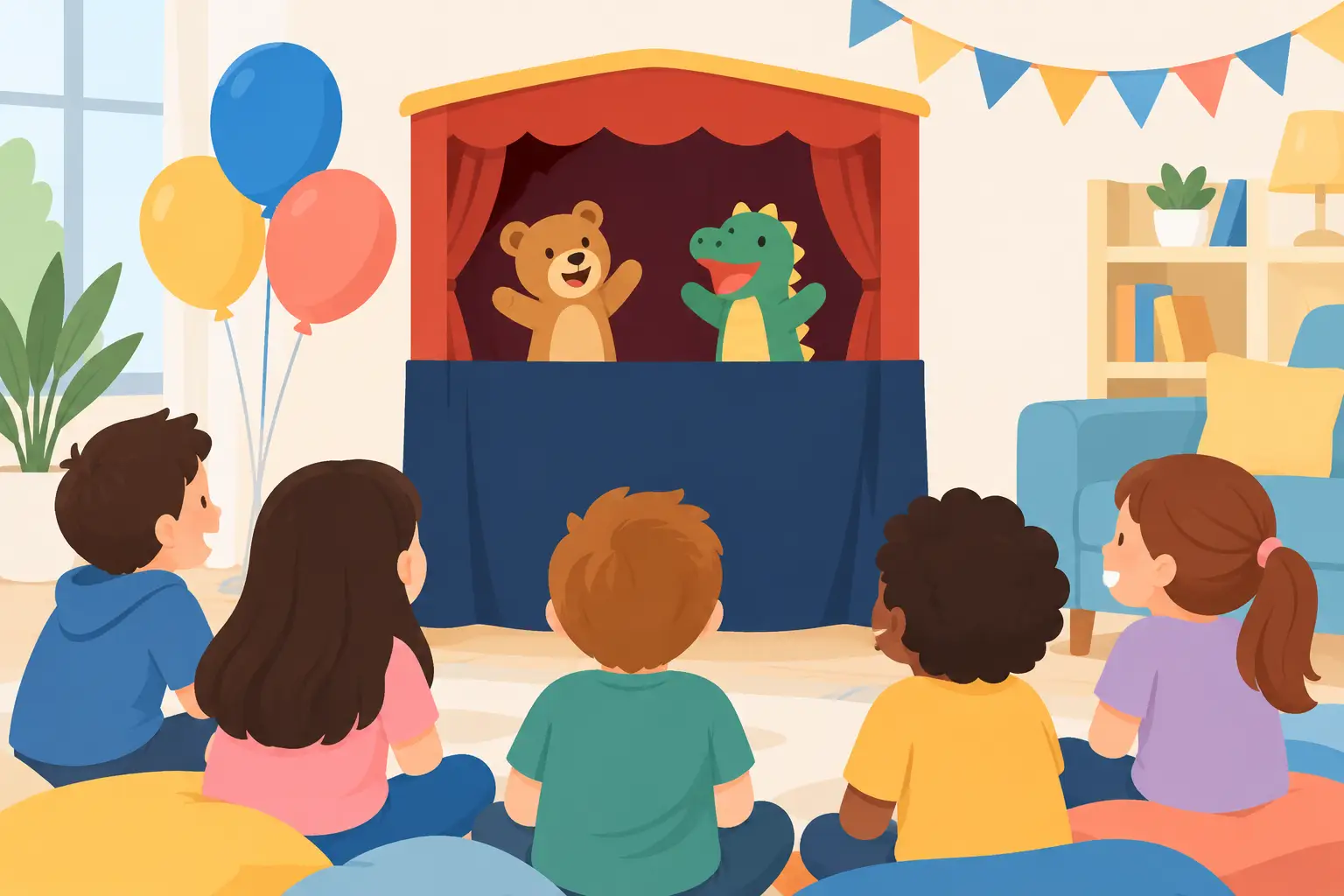
A room full of excited children does not need more noise, more sugar, or one more grown-up trying to herd everyone into a game. It needs a moment that gathers the room. Puppet shows indoors do exactly that: the lights can soften, the little audience can settle near the stage, and suddenly a birthday party feels like a real event built especially for its guest of honor.
For Bay Area families, an indoor puppet show can be the difference between hosting the party and actually enjoying it. The children get a whole lot of silly, the birthday child gets to feel wonderfully seen, and the adults get a reliable centerpiece instead of spending two hours inventing the next activity.
Why Indoor Puppet Shows Work So Well for Kids
Children ages 1 to 9 are not a single audience. A toddler may be delighted by a friendly puppet popping out to say hello, while a first grader wants a funny problem to solve and a chance to shout the answer before the character figures it out. A well-paced live puppet show has room for both.
Indoors, performers can shape the experience with fewer distractions. There is no wind knocking over props, no playground scramble pulling children away, and no worry that a neighbor's leaf blower will arrive right during the big reveal. Kids can hear the voices, see the puppets clearly, and follow the story from beginning to end.
That matters because attention is not something children simply bring with them. It is something a skilled performer earns moment by moment. Music, call-and-response, visual surprises, gentle repetition, and plenty of chances to participate help even wiggly guests feel like part of the action. The goal is not to make children sit perfectly still. It is to give all that wonderful kid energy somewhere joyful to go.
The birthday child gets more than a shout-out
A standard party activity can be fun. A personalized puppet theater experience lands differently. Imagine a puppet setting off on a mission with your child's name in the story, their favorite song at just the right moment, and their beloved stuffed animal suddenly receiving an important role. That stuffy is not just watching from the couch anymore. It may be the brave helper, the keeper of a clue, or the one who knows how to save the day.
Those small details are huge to children. They recognize that the show was made for them, not pulled from a shelf and repeated exactly the same way for every party. The other guests love it too, because a personal story still has all the ingredients kids want: funny characters, a little suspense, songs, and a very satisfying silly ending.
Planning Puppet Shows Indoors Without the Stress
The word “theater” can make parents picture a complicated production. For an in-home party, it should mean the opposite: one polished activity that takes a major item off your hosting list. A portable stage gives the show a clear home, helps children understand where to look, and makes the experience feel special even in a living room, community room, classroom, or library meeting space.
Start with the room, not the guest list. Most indoor shows need a clear performance area and a comfortable place for children to sit facing the stage. An 8-by-8-foot setup area is a useful planning target for a staged puppet theater, though the right footprint depends on the show and venue. Move coffee tables, loose toys, and tempting party favors out of the audience zone before guests arrive. A clear little theater corner helps prevent the front row from gradually becoming the onstage crew.
It also helps to think about timing. For many birthday parties, the show works beautifully after guests have arrived and had a few minutes to warm up, but before cake and presents. Children have something exciting to anticipate, parents have time to greet people, and the party has a natural rhythm. After the show, kids can eat, play, and talk about the character who made them laugh the hardest.
A 45-minute show can be a sweet spot for many groups, but age and schedule matter. Very young children may do best with a shorter format or a show designed with extra movement and flexibility. Older children can enjoy a longer story, bigger audience participation, and more elaborate jokes. A thoughtful entertainer will ask about ages, group size, the birthday child's interests, and the setting before recommending the right fit.
A few indoor details make a big difference
You do not need a picture-perfect house. Children are not judging your throw pillows. They do benefit from a room that is safe, easy to enter, and free of obstacles near the performance area.
Keep snacks and drinks behind the audience if possible, especially anything sticky or likely to become an accidental maraca. Let families know where to park strollers, and consider saving high-energy party favors for after the show. If your space has hard floors, a rug, foam tiles, or a few floor cushions can make the front row cozier. For mixed ages, leave room at the back for caregivers with babies or children who prefer to watch from a little distance.
Noise is another practical consideration. Indoor shows do not require silence, and happy audience reactions are part of the fun. Still, turning off the television, silencing notification-heavy devices, and asking adults to keep side conversations low gives children the best chance to stay connected to the story.
When an Indoor Show Is Better Than a Backyard Party
An outdoor party can be lovely when the weather cooperates and the space is right. But outdoors comes with variables: sun, wind, chilly fog, bugs, street noise, and the magnetic pull of swings, scooters, and open grass. For a puppet performance, those distractions can dilute the magic.
Puppet shows indoors are especially helpful for winter birthdays, apartment gatherings, smaller homes with access to a shared community room, and events where a clear schedule matters. Schools, camps, and libraries also benefit from the structure. Rather than rotating children through loosely supervised stations, organizers can offer a shared experience with a beginning, middle, and end.
That does not mean an indoor show is automatically the answer for every group. If you have a very large guest list, a tiny living room, or a venue with strict sound rules, planning may require a different layout or format. A professional provider should be candid about what will work in the space, rather than promising a grand theater experience that leaves everyone squeezed behind a sofa.
What Parents Can Hand Off to the Performer
The best party entertainment does more than fill time. It gives parents permission to stop managing every minute. When the show begins, you are not leading a craft, watching the bounce house, or wondering whether the quiet child in the corner has been left out. You can take photos, pour coffee, welcome late arrivals, or simply watch your child light up when their name appears in the adventure.
That confidence comes from preparation. Experienced child-development and performance professionals know how to invite shy children in without putting them on the spot, redirect a very enthusiastic helper without embarrassing them, and keep a mixed-age audience feeling included. They also understand that a little unpredictability is normal. A toddler may announce that the puppet needs a snack. An older sibling may try to solve the entire plot in 30 seconds. Good performers do not fight those moments. They use them.
Ricky Roo & Friends brings that level of preparation to personalized, staged puppet theater across the Bay Area, with the bright, silly energy children adore and the practical planning adults need. The result is not just a show happening at your party. It is a memory with your child's name on it.
Give the Room a Reason to Gather
The most memorable children's parties usually have one moment everyone remembers together. Not just the frosting color or how many balloons made it home, but the gasp when the puppet appeared, the chorus of voices singing along, and the birthday child's delighted look when their treasured stuffy became part of the story.
Choose an indoor activity that gives your guests that shared moment, then let the rest of the celebration be delightfully easy. A little clear floor space, a room full of children, and permission to be wonderfully silly can go a very long way.
Ready to Book Your Show?


